One low vessel.
Many points of view.
The illustrative commission begins with an oval that resists being quite regular. Follow its opening, wall and foot before deciding what a related form might do in your space.
Look closer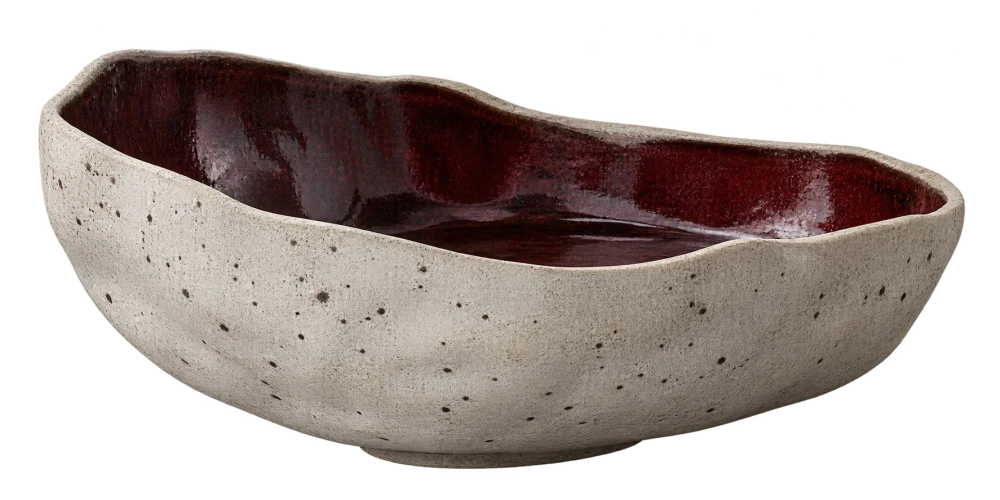
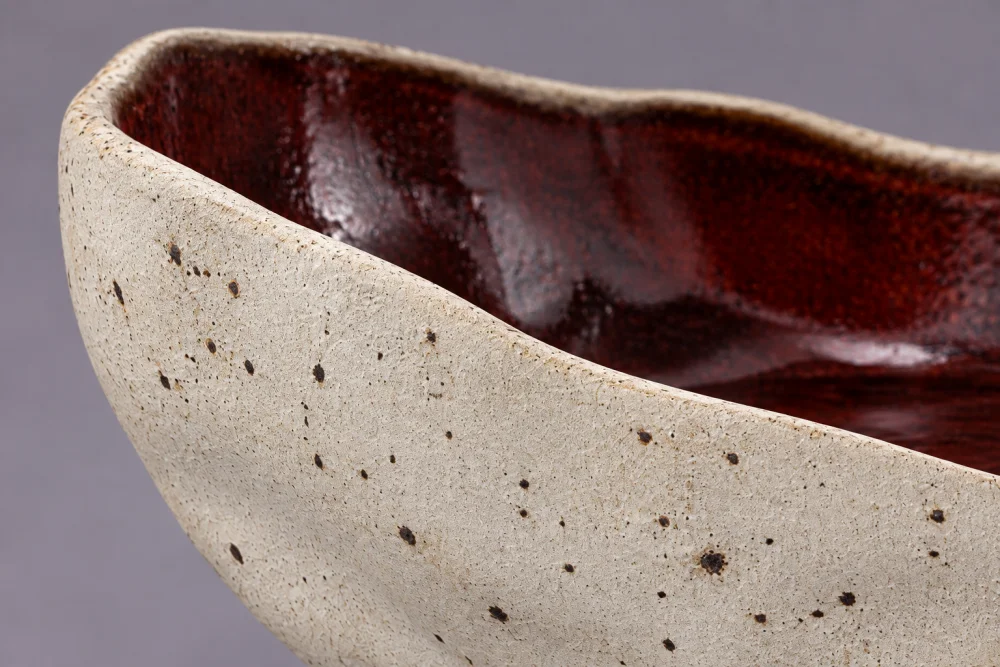
The opening
sets the gesture.
The rim does not describe a perfect ellipse. It rises and falls, leaving the opening visible from some angles and allowing the outer wall to dominate from others.
For a commission, that is a useful question: will you usually see the piece from above, across a room or from a seated position? The answer changes which part of the form does the most work.
Consider a centerpieceA wall with
a quiet surface.
The pale granular body makes the small irregularities legible. Against it, the oxblood interior feels deeper. This is an illustrated material direction, not a glaze sample or promise of a particular fired result.
A real commission needs a physical material conversation: surface feel, contact with the intended contents, cleaning, and the maker’s confirmed care instructions.
What to ask about material and care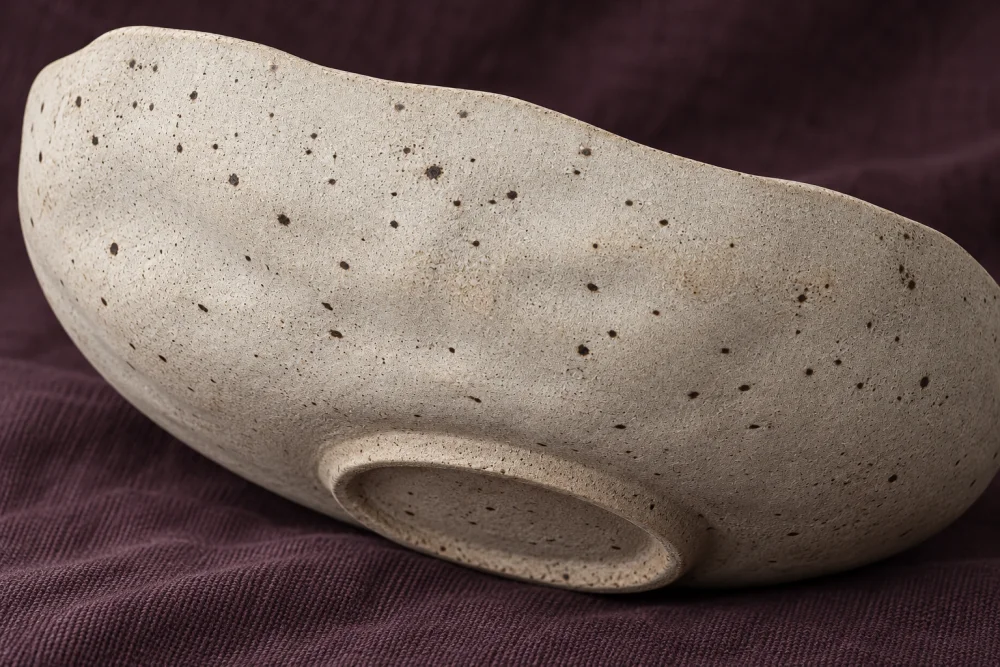
The part you
rarely see.
The recessed foot lifts the rounded body slightly from its setting. It matters because an object is not only looked at: it must meet a surface, be lifted and be put back down.
Discuss stability, the surface underneath and how the piece will be moved. A photograph cannot establish flatness, weight or whether a protective pad is needed.
Make the next form
specific to its place.
The useful starting point is not “the same, but bigger.” Tell us how it will sit, what it will hold and how much of its surface it should occupy.
Explore format and scale