Beautiful is only
the beginning.
An object also has to be placed, lifted and cared for. These are questions to resolve with the maker for your actual piece; the illustrated study carries no material or food-safety certification.
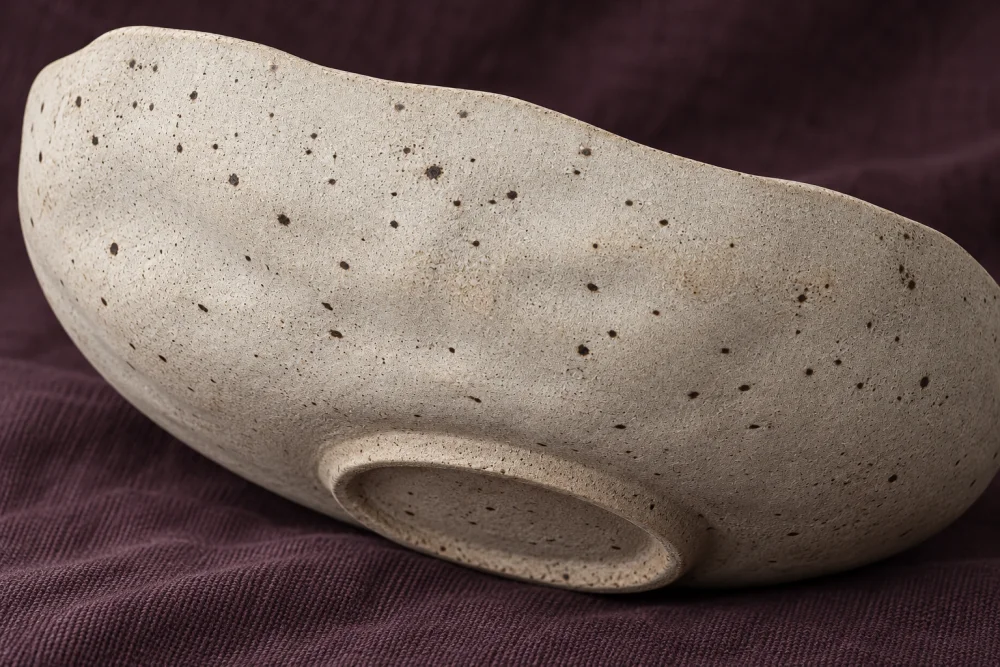
Where it meets
the room.
Describe the surface underneath: wood, stone, lacquer or something else. Ask about the actual foot finish and whether it needs a protective layer. Check the intended placement rather than assuming a ceramic base is harmless on every surface.
Consider reach and weight as well as proportion. The safest way to lift a particular form should come from its maker; do not infer it from the shape of a photograph.
Questions worth keeping
Can it hold what I have in mind?
Name the contents and conditions: food, water, dry stems, metal keys, outdoor exposure or heat. Ask the maker to confirm whether the exact clay, glaze and process are suitable. This template provides no such guarantee.
How should the actual surface be cleaned?
Request written instructions for the completed piece. Confirm permitted cleaners, immersion, drying, dishwasher use and any precautions for an unglazed surface. Do not treat the illustration’s glossy interior as proof of a cleaning method.
What variation should I expect?
Agree how shape, surface and color will be reviewed. A digital image is a direction, not a physical sample. Ask what can be controlled and what variation is part of the agreed making process.
How will it arrive and be looked after?
Confirm packaging, delivery arrangements, inspection on arrival, and the procedure if damage occurs. Record the actual terms and timescale with the maker; none are promised by this demonstration.
A useful care note
travels with the object.
Keep the maker’s name, the confirmed intended use, care instructions and any material restrictions together. If those details are missing, ask before putting the object into service.
Add care questions to your brief