From a conversation
to a clay form.
A studio diary for a possible commission. The object and process below are illustrative; your maker’s actual methods, people and experience belong in the marked fields.
Give the idea
a physical boundary.
A useful brief brings together the place, intended use and approximate scale. It does not need to resolve every contour. Begin with photographs of the setting, measurements and a description of what matters most.
The first agreement should distinguish firm requirements from things the maker can explore. Confirm the review points, material decisions and terms before proceeding.
Work through your scale relationship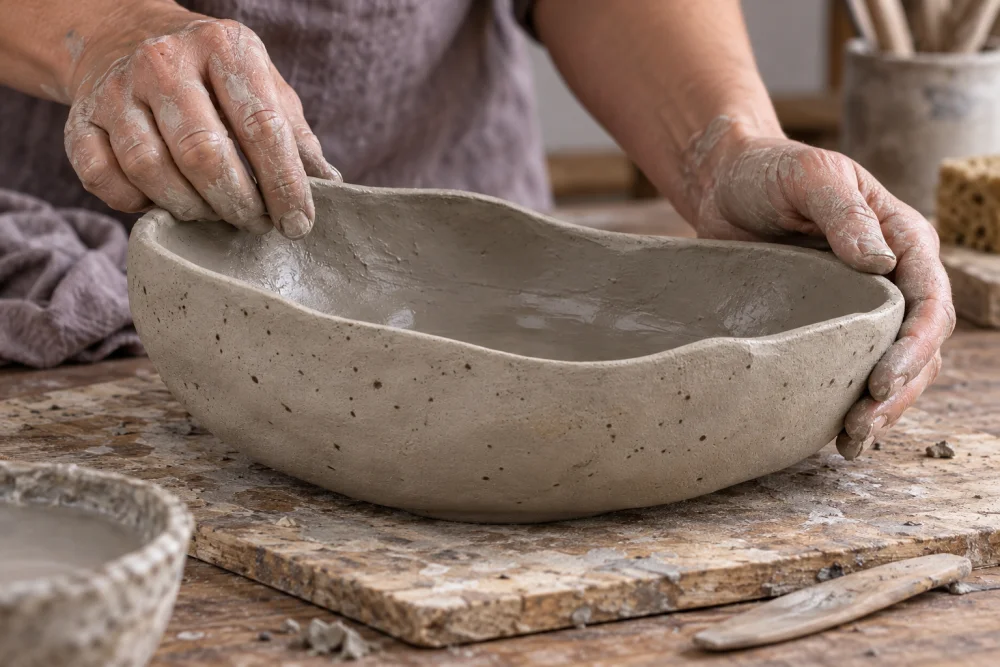
Allow for looking,
then deciding.
The irregular rim is a visual direction, not an instruction to reproduce a digital contour exactly. A maker may use drawings, trials, samples or a physical model to explore a commission. Ask which review method fits the actual work.
Document any changes to use, scale or finish as the project develops. A new purpose may require a different material decision; a new scale may change handling and stability. Do not assume an earlier agreement still covers a changed brief.
The hands behind your studio
Instructional owner profile. Replace with a real responsible maker and supported experience; the demonstration claims none.
Alt-text field: Sample: Describe the actual person or work shown, with useful context.
Sample: Owner or maker name
Sample: Role and responsibility in the studio
Serving Sample: area since Sample: year
Sample: Tell the true short story of your studio: what led to the work, whom you serve and how you approach a commission.
Sample slot: add your own verified details.
Maker’s business record
Conditional fields; no credentials are claimed.
Sample slot: add your own verified details.
Sample slot: add your own verified details.
Your actual studio,
in its own light.
Supply your own real owner, team and clay-work photographs, not stock people or generated documentation. Obtain photographer, identifiable-person and client permission where relevant. Describe the real subject in the alt-text field and use a factual caption.
Alt-text field: Sample: Describe the actual person or work shown, with useful context.
Alt-text field: Sample: Describe the actual person or work shown, with useful context.
A real piece,
a true account.
[Add the factual context of this real supplied work: the brief, your responsibility and the choices made. Include only information you can support and have permission to publish.]