One workflow, made visible.
Sample engagement: an internal request moves from a shared inbox to an agreed handoff. This is fictional demonstration work, not a client case study.
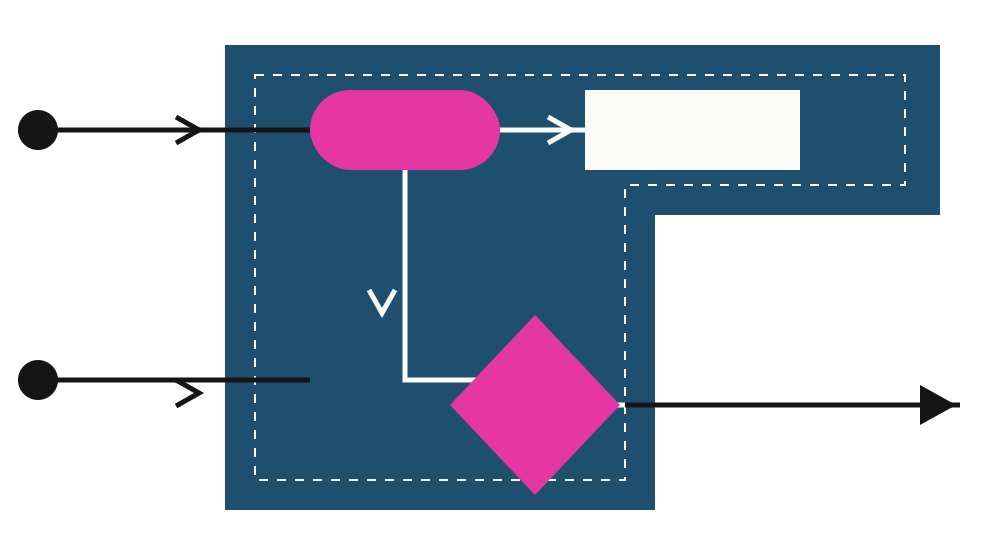
Draw the boundary first.
The example examines the route from a received request to a named owner accepting the work. It does not cover every tool, every department or the delivery itself.
What we would examine.
- How a request enters the team and becomes visible.
- What information is needed to make a decision.
- Who accepts ownership and how that acceptance is recorded.
- Where an exception returns for clarification.
Choose a limited, representative set of examples. Remove personal and commercially sensitive information before sharing.
A useful handover.
The proposed output must be something your team can edit.
Map and notes
A plain dependency map with a text description of every connection and an explicit list of unverified assumptions.
Decision log
A record of agreed changes, who owns each decision and the reason behind it.
Trial outline
A small next step, its boundary and the questions to review afterward. No result is promised by this demonstration.
Agree before starting.
- Timing
- Sample: an agreed schedule after confirming availability.
- Fee
- Sample: written quote and payment terms.
- People
- Sample: Name the decision maker and participating team members.
- Access
- Sample: Agree secure access and retention arrangements.