Lemon-mustard
vinaigrette.
One useful technique: break oil into fine droplets, then keep them together long enough to dress a salad. This is a short practice lesson, not a timed test.
Gather, then begin.
A small batch for practice. Mustard is an allergen; check your ingredients and any dietary requirements.
0 of 5 preparation items checked.
Step 1 of 3
Start with
the sharp things.
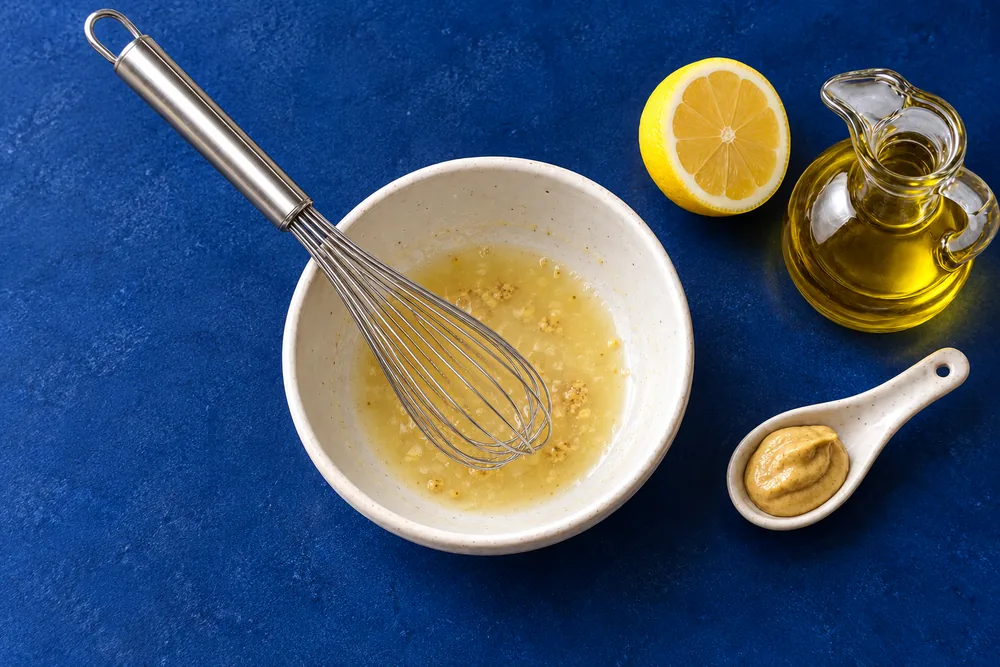
Whisk the lemon juice, mustard and salt together until the mustard is evenly dispersed. A stable bowl leaves one hand free to add oil in the next stage.
Choose the observation that matches the goal.
Keep the whole
method close.
Make a smooth base
Combine 1 tablespoon lemon juice, 1 teaspoon Dijon mustard and a small pinch of salt in a bowl. Whisk until there are no distinct lumps of mustard.
Add the oil gradually
Whisk continuously while adding 3 tablespoons olive oil in a thin stream. If oil begins to pool, stop pouring and whisk the mixture together before adding more.
Taste on a leaf
A dressing should be judged with the food it will dress. Taste a little on a leaf, adjust lemon or oil in small amounts, and whisk again. Temporary emulsions can separate; whisk again before use.
What you just practiced.
Preparing before you start. Adding a little at a time. Recognizing a change in texture. Tasting in context. These are useful kitchen habits, even when dinner has nothing to do with salad.
Bring your questions to a class