The space
between.
A path is not simply what remains
after the planting is drawn.
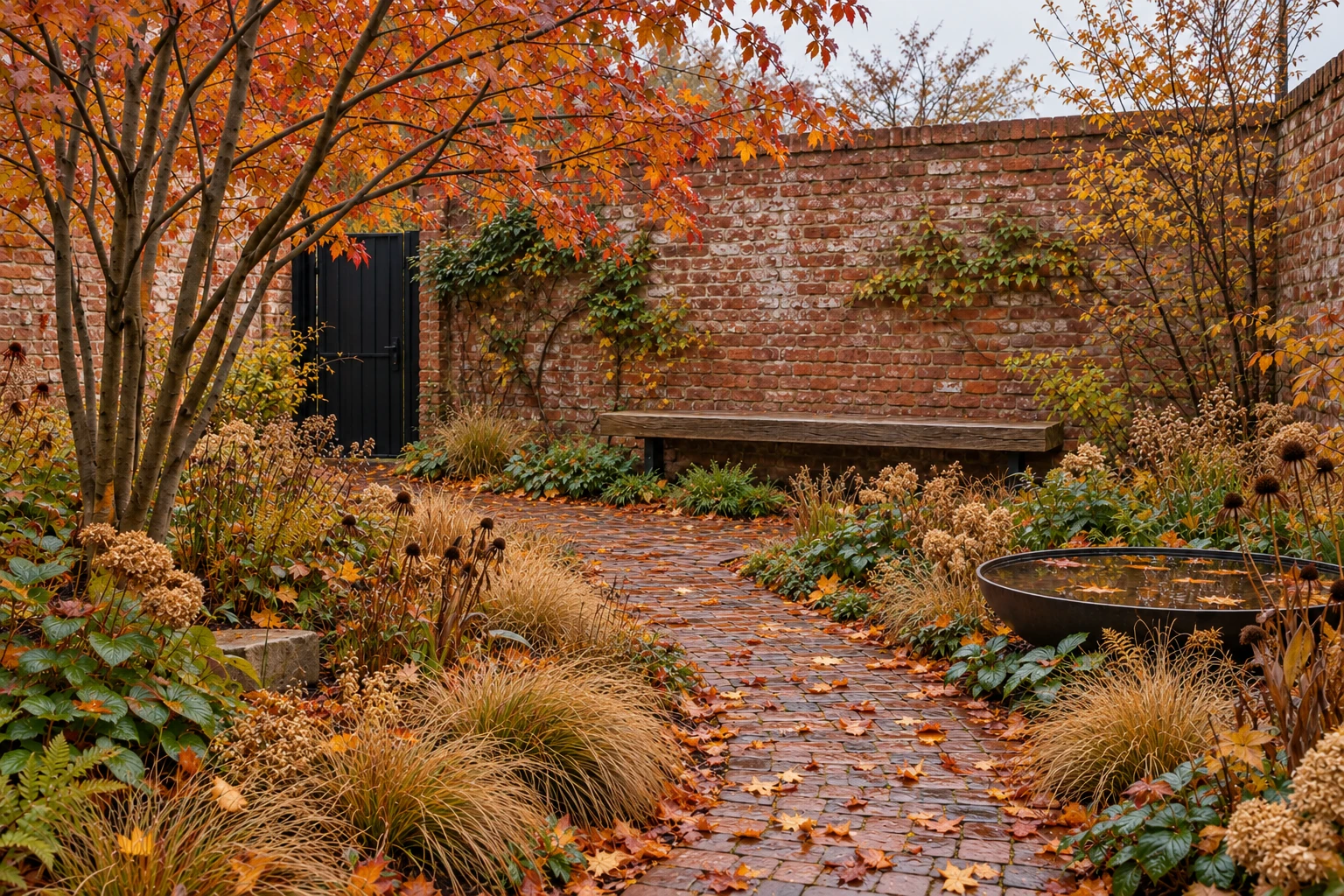
In spring, the planting invites a close look. In summer, the same edge can begin to occupy the route. By autumn, fallen leaves make the line visible in another way. A good path is an ongoing conversation with the things beside it.
The route is part of the planting.
The clay line in this courtyard connects the gate, the bench and the rain bowl. It also creates a sequence of near views: grass at the ankle, a flower at hand height, the changing canopy above.
That closeness is part of the pleasure of a small garden. It also needs attention. The intended softness at an edge is different from a route that has become difficult to use.
Care can preserve character.
The aim is not to make every edge straight or every stem disappear. It is to understand which elements can remain loose and which need to be dependable. The path should offer clarity while the planting is allowed to change.
A seasonal record helps distinguish a brief moment from a persistent issue. One photograph is an observation. Several visits begin to show a pattern.
Start with a useful question.
Instead of asking “Does this need tidying?”, ask “What is this space asking people to do, and can they do it comfortably?” That question gives care a purpose beyond appearance.
Read the autumn care observations ↗