Spring
Observe
Emerging growth, soil moisture and the first change in shade.
Consider
Check which plants are returning before filling apparent gaps. Record the route after rain.
LANDSCAPE DESIGN
& SEASONAL CARE
A ground-level transect through the same courtyard.
Choose a season, then inspect a layer.
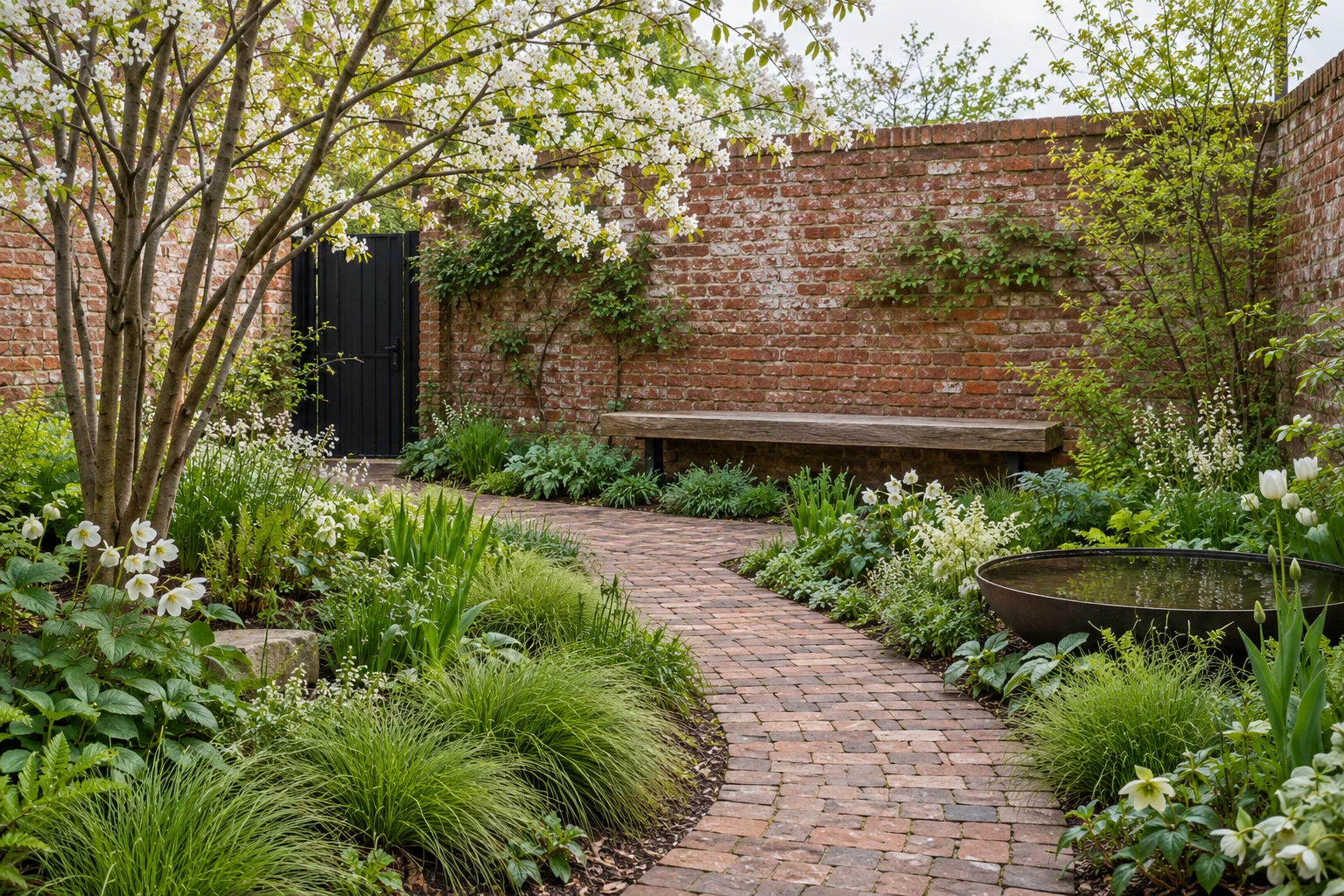
The small tree begins to filter the light. Observe the changing shade beneath it before deciding what the lower planting needs.
Observation comes before intervention. These illustrative notes describe what to look at; the right action depends on the site, weather and actual plants.
Emerging growth, soil moisture and the first change in shade.
Check which plants are returning before filling apparent gaps. Record the route after rain.
Canopy shade, crowded edges and how quickly exposed soil dries.
Check moisture at root level before watering. Keep the route usable without erasing the planting’s softness.
Leaf fall, seed heads, persistent structure and wet surfaces.
Keep the walking line clear. Decide which standing stems can remain for structure and habitat.
Bare branches, drainage patterns and the structure left by grasses.
Use the quieter view to assess access and shelter. Plan changes before assuming the dormant garden is empty.
Carry one season and one priority into a practical site conversation.
Record the places where the planting feels thin, crowded or hard to read before choosing replacements.
Prepare a site / care brief ↗