A place works
through its relationships.
Fieldwork is a fictional landscape design practice for public gardens, shared courtyards and hospitality landscapes.
Our approach connects spatial design with everyday use and long-term care. The question is not only what a garden will look like, but what it will make possible.
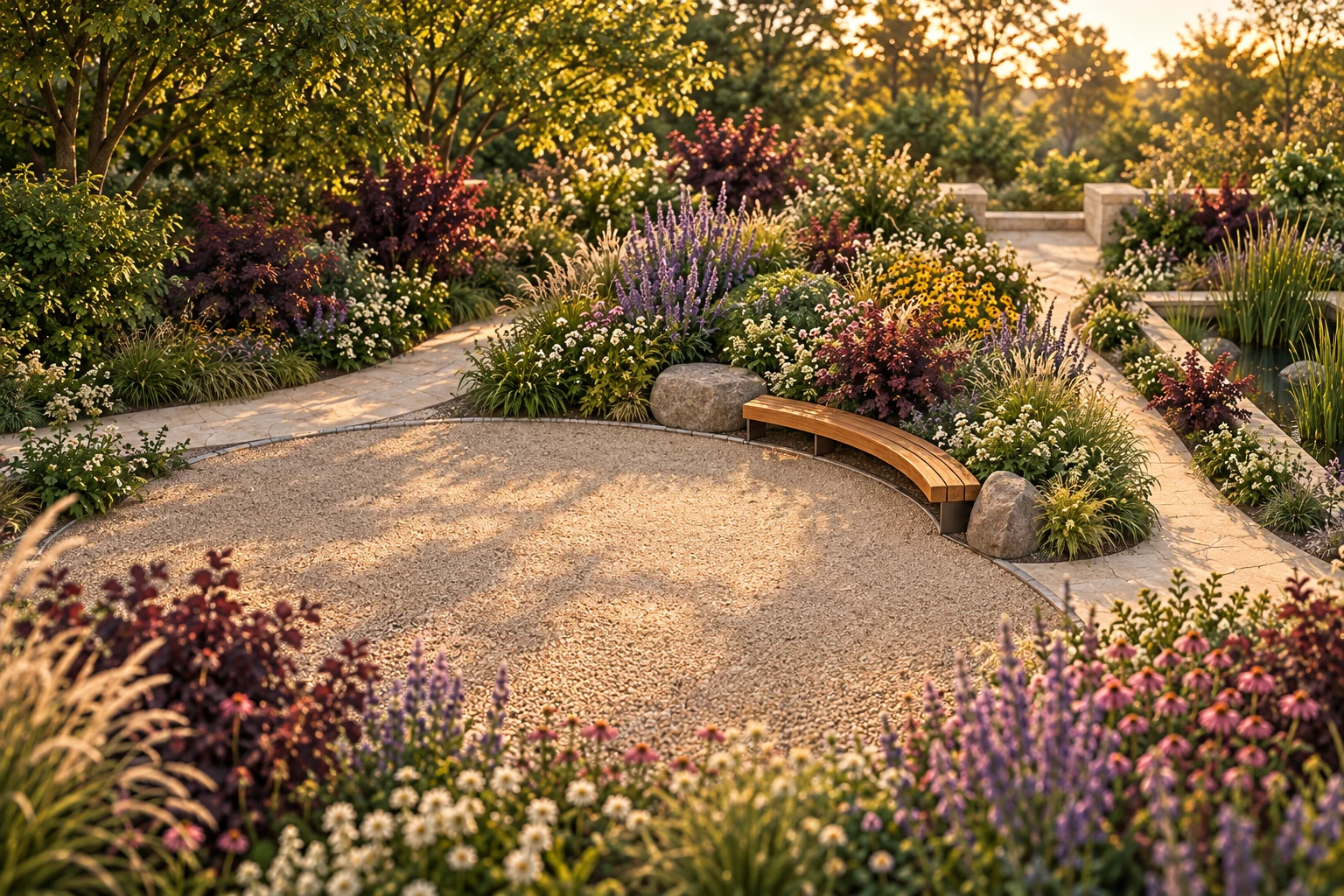
Mill Yard Garden · An original concept study
Start with the life
of the place.
- Observe before arranging
- Notice desire lines, shade, thresholds and the times when a place is used. A drawing should answer what is happening on the ground.
- Design the connections
- Arrival, circulation and places to pause work together. Planting can define their relationship without becoming a barrier.
- Bring care into the brief
- A landscape changes. Understand who maintains it, what they can support and what should remain clear as it matures.
The people
behind the plan.
Sample practice record · Replace all bracketed text with truthful business information.
Sample: Owner or practitioner name
Sample: Actual role in the practice
Serving Sample: area since Sample: year
Sample: Tell the short story of your practice: why you began, which places you work with and how you collaborate with the people using them.
Sample slot: add your own verified details.
Sample slot: add your own verified details.
Sample slot: add your own verified details.


Sample photo instructions: supply buyer-owned photographs with permission from everyone shown and permission to publish the work. No stock people. Replace each image’s alt description and caption with accurate details before publishing.
Where this thinking belongs
Community gardens that need clearer arrival and shared use. Hospitality grounds that need an understandable sequence. Residential courtyards where movement, gathering and planting must coexist.
Work begins with the actual site, a defined scope and the relevant local expertise. Our example garden is a design conversation, not a construction package.
Follow the design process