What remains
when flowers fade?
Observation notes from the Mill Yard concept. An autumn reading of a summer plan, with practical questions to carry back to a real site.
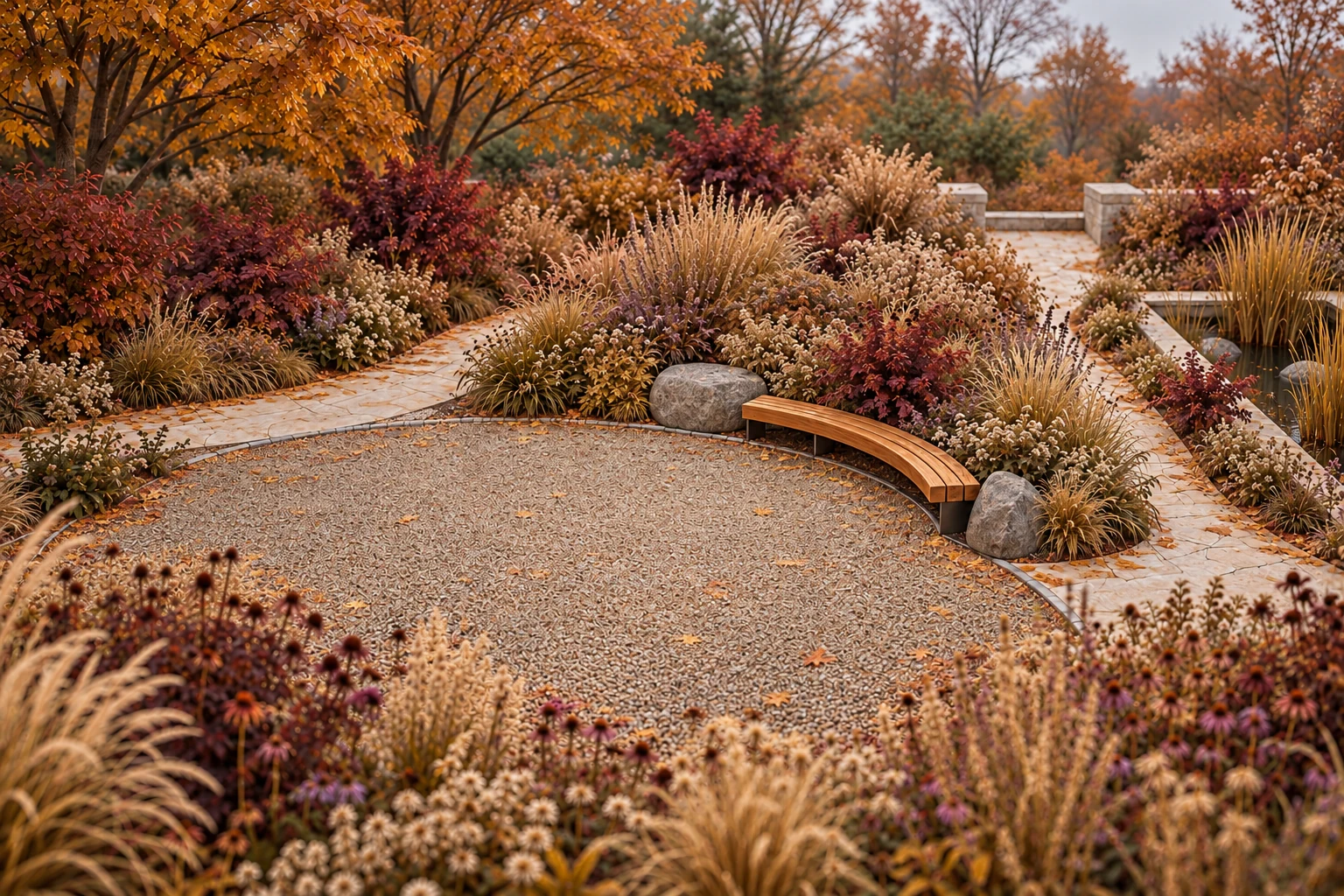
The seat still holds the edge.
In summer, planting draws the eye. In this autumn study, the curve of the bench and the pale path become more apparent. The design has a structure that does not depend on a permanent peak of flowering.
That is a useful question for a real garden: when foliage changes, is there still an understandable place to arrive, sit and leave?
A clear route needs ordinary attention.
Seasonal debris, spreading growth and worn surfaces can change how a route feels. An intention on a plan is not enough. The care brief should identify the route that needs to remain legible and the people who check it.
Look at the path from the point of arrival, not only from the drawing.
Care is part of the design conversation.
Standing stems may offer texture and habitat value in some settings, while other areas need clearer edges. The right approach depends on species, local conditions, site use and the capacity of the people maintaining it.
Our concept suggests where to look; it does not prescribe a maintenance regime for an unknown site.