A note someone
else can read.
Good documentary research keeps its route from source to statement visible. The reader should be able to see what was recorded, what was inferred and where confidence ends.
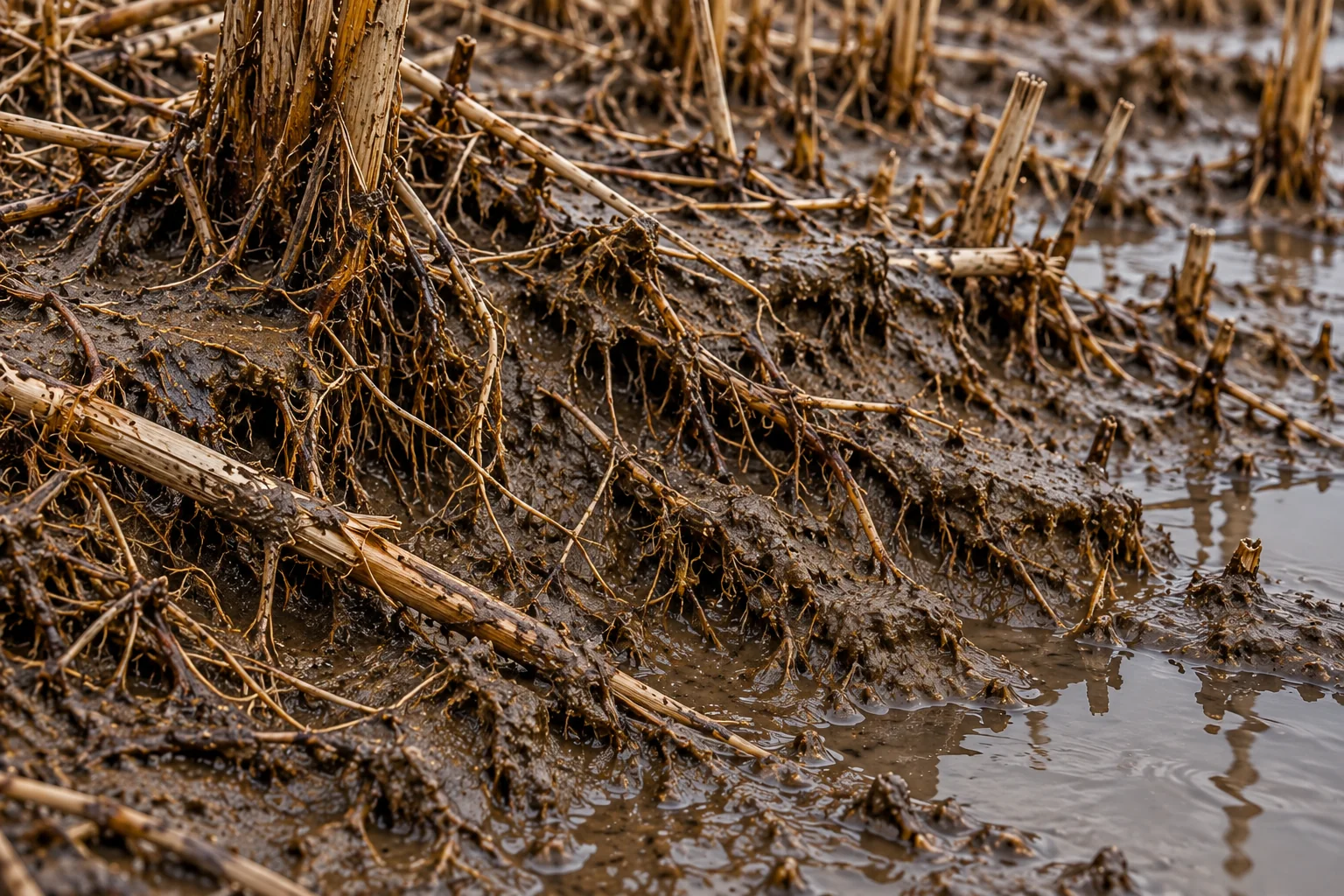
Describe before
you explain.
A worked note
- Visible detail
- Fine roots extend across a dark sediment face. A glossy water film sits beside them.
- Possible reading
- The exposed face raises a question about how the bank changes over time.
- Evidence needed
- Repeat observations and site context before assigning a cause or describing a trend.
Example based only on generated plate B. It is not a scientific finding.
Build a traceable account.
Start with one question.
Name what you want to understand. A question about a boundary is more useful than a general instruction to “document the landscape.”
Keep the source attached.
Record the creator, origin, date where known, method and limitations. Mark unknown information as unknown.
Separate the sentence types.
Write an observation without a hidden explanation. Then write the interpretation separately and name what could challenge it.
Leave an honest opening.
Finish with the next observation or source that would help. A report can make uncertainty usable without pretending to remove it.
What are you
trying to understand?
Start a research questionDocument your
own practice.
Actual reporting / work photo slot. Add a permitted photograph of how your business works. This business record is separate from the generated marsh plates and their illustrative observations.
Sample photo instructions: use your own buyer-owned photos with permission from everyone shown and any client or location owner. No stock people. Replace each image’s alt description and caption to describe your actual photograph.