Things we
keep noticing.

Short observations on making, materials and the unexpected places ideas come from.

A little less control.
A little more possibility.

The first version of an idea is often the version we already know how to make.

There is comfort in a clear plan. But a plan can become a filter that removes everything we did not expect. In the studio, we try to leave a small part of the process unresolved.
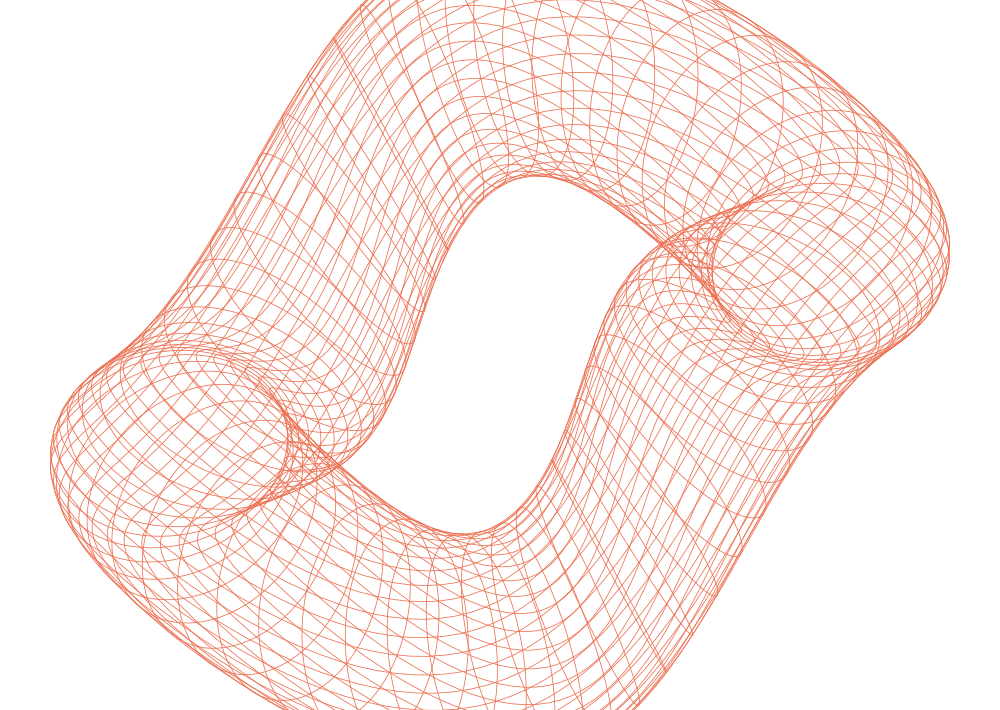
Interference pattern, a form emerging from a repeated rule.
A rule can be precise while its outcome remains surprising.

That might mean changing a single parameter, using a familiar material in an unfamiliar way, or asking someone outside the project what they see. The point is not randomness. It is making room for information that our assumptions would otherwise hide.

The useful surprise usually arrives quietly. It is a proportion that feels right, a behavior that invites another attempt, or a mistake with a better answer inside it.

Thinking with
your hands.

A sheet of paper knows things a mood board does not.

Fold it and it becomes stiff. Turn it and light changes its edge. Put it beside another sheet and a rhythm appears. These are small discoveries, but they are specific. They replace an abstract preference with a real observation.

Digital work benefits from the same approach. Change the scale. Try the interaction. Put the prototype in someone else's hands. It is easier to discuss an experience that exists.

The useful constraint.

An open brief is an invitation. A good constraint gives us somewhere to begin.

One material. One gesture. One page. Restrictions reveal priorities and make decisions visible. The trick is choosing a constraint that serves the work, rather than one that simply makes it familiar.

We often begin an experiment with a deliberately narrow rule, then ask how much variety that rule can support. The field on our homepage began this way: one curve, many relationships.

Sample business, made up for this preview